The ceremony is the bit where it all becomes properly real. There may be readings, rings, slightly wobbly voices and at least one person pretending they have something in their eye. This guide to wedding ceremony photos is here to help you get the meaningful images without feeling like you are starring in a very awkward production.
For most couples, especially those who would rather eat their own centrepieces than pose for hours, the good news is simple: the best ceremony photographs are not manufactured. They happen when you are present with each other, your guests and the moment. A good photographer knows where to stand, when to stay quiet and when to gently keep things moving, so you can get married rather than spend the day worrying about the camera.
Your guide to wedding ceremony photos
Ceremony photos are about more than the obvious milestones. Yes, you will want the aisle entrance, ring exchange, first kiss and walk back down the aisle. But the photographs that often become favourites are the little reactions around them: your mum seeing you for the first time, your best mate trying to hold it together, a grandparent beaming from the front row, or the relieved grin you give each other once the legal bit is done.
That is why documentary-style coverage works so well here. The ceremony has its own rhythm. There is no need to keep stopping it to create moments that are already unfolding beautifully in front of everyone.
Before guests arrive: set the scene, then forget about it
Before the ceremony begins, a photographer can capture the details that help tell the story of the place: the flowers settling into position, empty chairs, order-of-service booklets, hands adjusting buttonholes and the nervous excitement in the room. These images give your gallery a sense of build-up without turning your morning into a photoshoot.
If you are getting ready nearby, allow a little breathing room in your plans. Not a military operation with a colour-coded spreadsheet and a whistle. Just enough time that no one is applying mascara while shouting, “Where are the rings?” A calmer start nearly always leads to more natural photographs later.
It is also worth sharing the full ceremony timing and any venue rules in advance. Churches, registrars and celebrants all work differently. Some are happy for photographers to move discreetly; others have clear boundaries about where cameras can be during readings or vows. A professional will respect those rules while still planning the best possible angles.
The aisle entrance: let it happen at your pace
The aisle entrance is one of those moments people imagine long before the day arrives. Whether you walk in with a parent, together, with your children or make an entrance entirely your own way, there is no need to perform it for the camera.
Walk at a comfortable pace and look where you want to look. If that is at your partner, brilliant. If you are too busy trying not to cry, also brilliant. The emotion is the point. Your photographer will be ready for the arrival, the reaction at the front and the guests who suddenly become very interested in their tissues.
A useful practical tip: ask your officiant or venue whether guests can be encouraged to keep phones down during the entrance. A sea of glowing screens can block faces and pull everyone out of the moment. One quick announcement is usually all it takes. Your guests can relax, and they will receive photos where they are actually in the room rather than hiding behind a phone.
What your photographer is looking for during the ceremony
The key moments matter, but ceremony coverage should never feel like a checklist being ticked off in the corner. It is about noticing connections as they happen.
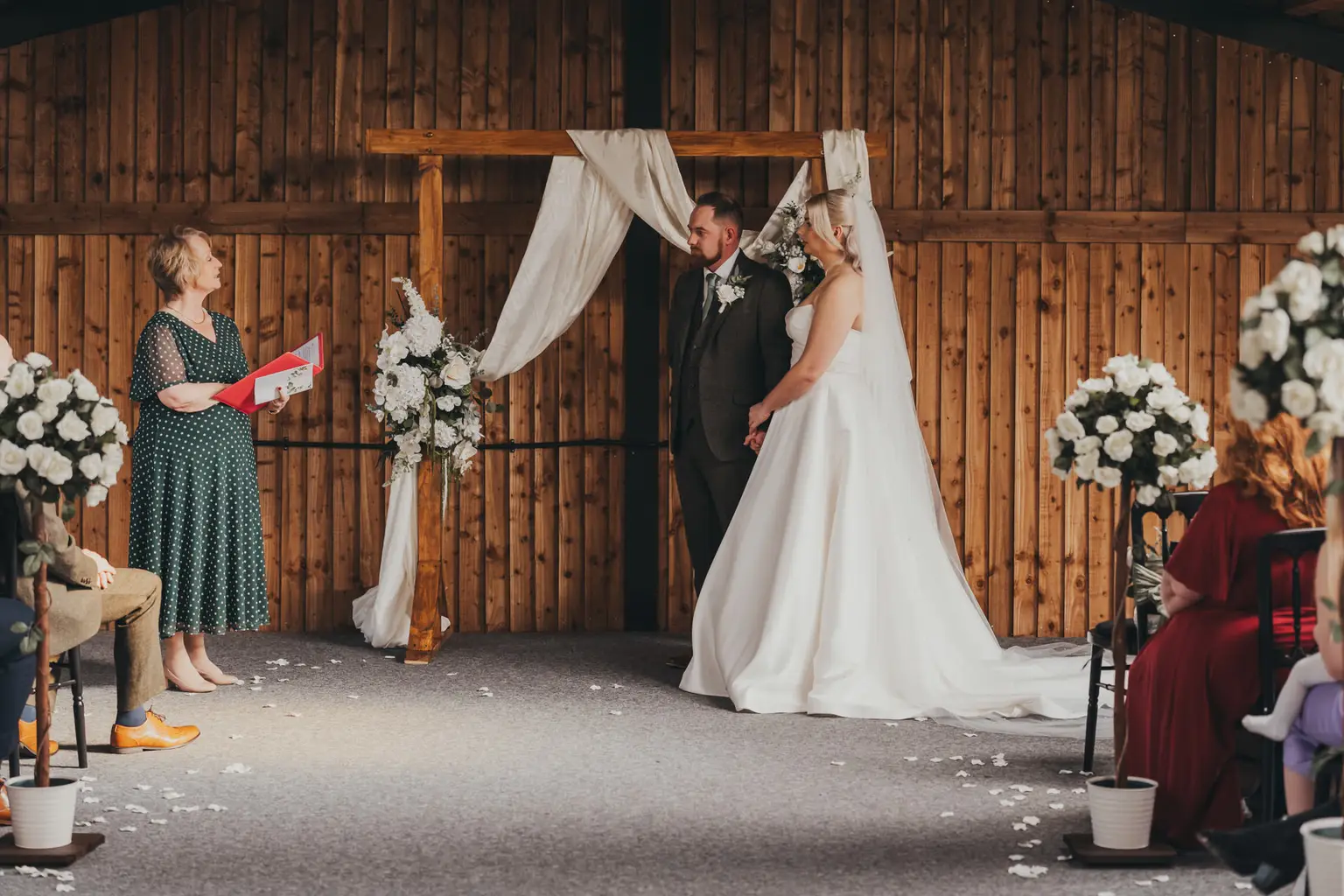
During the vows, your photographer will usually focus on the two of you while keeping an eye on reactions from close family. During readings, there is time to capture the person speaking, your response and the small interactions between guests. At the ring exchange, a closer angle can tell the story of the hands and nerves, while a wider one places you within the atmosphere of the room.
The first kiss deserves a mention because it can go by at lightning speed. There is no need to hold it for an uncomfortably long time, unless that is your natural style. Just do what feels right. An experienced photographer anticipates the moment rather than yelling instructions halfway through it. Nobody wants “Again, but with more romance!” ringing around the chapel.
The guests are part of the story
Your wedding ceremony is not a private portrait session with an audience. The people you invited are part of what made it matter. Their faces, hands, laughter and tears add texture to the story you will look back on.
For that reason, it helps to give your photographer freedom to photograph the room as well as the front. The joyful squeeze of a hand during the vows and the delighted whisper after the kiss may not have been on your original shot list, but they are often the images that transport you straight back.
This does not mean a photographer should be constantly wandering around and causing a distraction. Quite the opposite. Good ceremony coverage is quiet, thoughtful and deliberate. The aim is to be close enough to capture the feeling, and unobtrusive enough that everyone can forget the camera is there.
Planning ceremony photos without making it a faff
You do not need to produce a ten-page photography brief. In fact, too much scripting can make people anxious and can squeeze the life out of a day that is meant to be enjoyed. But a few useful conversations before the wedding make a genuine difference.
Tell your photographer about anyone especially important to you, particularly if they may be seated somewhere less obvious or have mobility needs. Mention family dynamics too, if there is anything you would rather handle sensitively. It is much easier to plan discreetly than to make guesses on the day.
If the light is likely to be challenging, do not panic. Many ceremonies happen in dark churches, bright glass rooms or barns with a very moody amount of natural light. These spaces can look gorgeous, but they require experience and the right approach. Flash may be unsuitable or prohibited, so your photographer needs to work confidently with what is available rather than treating the room like a studio.
Think about where you will stand during the ceremony, too. You do not need to face the camera, and you certainly do not need to grin through every reading. But standing close enough to each other to hold hands, share a glance or quietly react to what is being said creates lovely, honest moments. That is not posing. It is just being together.
Keep the exit clear for the big release
The walk back down the aisle is often one of the happiest parts of the whole day. The formal bit is over, you are married, and suddenly everyone is cheering. If you are having confetti, make sure guests know where to gather and ask them to leave a clear path.
More confetti is nearly always better than a polite sprinkling. Biodegradable petals or paper pieces that show up well in photographs give the moment energy and colour. The trick is not to sprint through it. Walk slowly, look at each other, laugh when it ends up in your hair and enjoy the glorious chaos.
If your venue does not allow confetti, do not force it. A cheering exit, flower petals in a permitted area, or guests waving napkins can still create a cracking set of photographs. The best option depends on the location and on what feels like you.
A note for camera-shy couples
You do not have to be photogenic. That word has caused enough trouble already. You only need to show up, marry your person and let yourself feel what you feel.
Most people become aware of the camera for about five minutes, then the day takes over. The ceremony, in particular, gives you something much more important to focus on than where your hands are. Your photographer should give calm, clear guidance when it is useful, then step back when the real moments are happening.
At Tom Stenlake Photography, that balance is the whole point: no stiff performance, no disappearing act, and no leaving you wondering what to do with your elbows. Just thoughtful coverage, a bit of reassurance and photographs that feel like your day rather than somebody else’s Pinterest board.
When you look back at your ceremony photos, you should remember the squeeze of a hand, the laugh that escaped at the wrong moment and the exact second you realised, “Oh. We actually did it.” Plan enough to protect those moments, then give yourself permission to be fully in them.